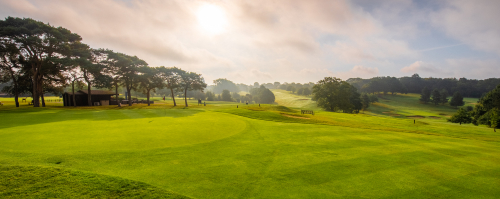
Golf has been played at Chelmsford Golf Club across three centuries. The timeline below highlights some of the major developments that have taken place during the last 130 years, including a relocation from Galleywood to Widford just before the First World War.
We are proud of our long, illustrious history as one of the oldest, private members’ clubs in the county, and we are equally proud of our tradition of being a welcoming, inclusive club with a membership that spans all ages, abilities and backgrounds.
We look forward to continuing to offer challenging, enjoyable golf in beautiful surroundings, to both members and visitors for decades to come.
Some notable events from our 130 year history are featured in our Timeline below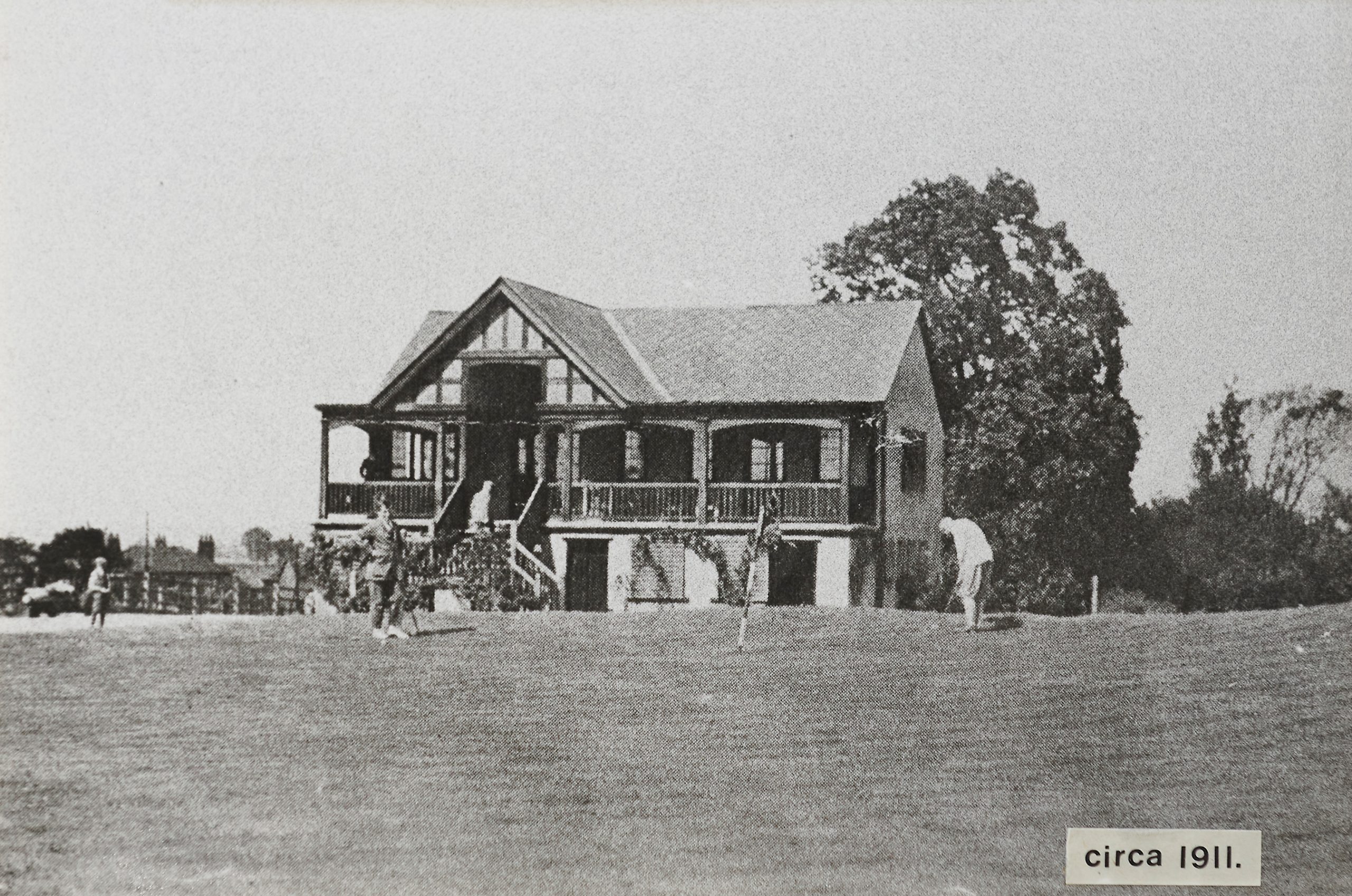

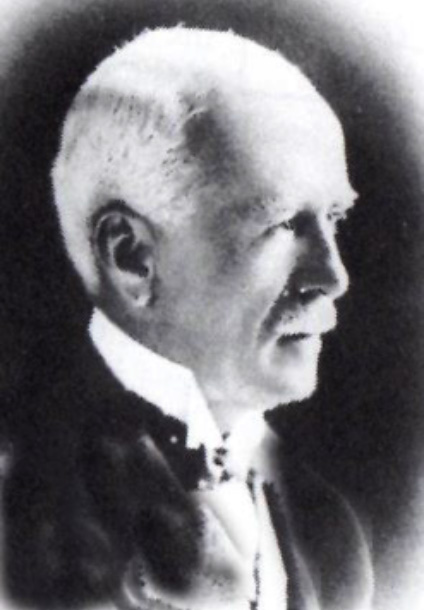
Elected as the first captain of the Chelmsford Golf Club. Right Hon. Arthur J Balfour M.P. was vice-president and became Prime Minister from 1902 to 1905 and Foreign Secretary from 1916 to 1919. He was also captain of the Royal and Ancient Club at St Andrews in 1894.
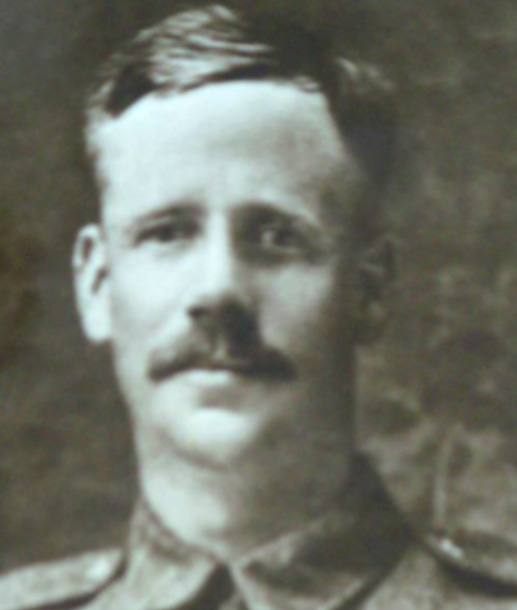
When George Sanders, the club’s first Professional left in 1907, Robert W Finch joined as the new Head Professional. Both had been pupils of James Braid. Finch played in The Open Championship at Deal in 1909 and at Prestwick in 1914. He was sadly killed in action in WW1 aged 32 and posthumously awarded the British War and Victory medals.
Following a long-drawn-out dispute over rental fees for the use of the land, those responsible for running the club elected to consider alternatives to the Galleywood Common course. The move to the new (current) location allowed for an 18-hole course and freed the members from the interferences to playing golf, which were endemic in a public utility, like Galleywood Common.

In the Autumn of 1910, James Braid the reigning and five time winner of The Open Championship prepares a layout for the new 18 hole course at Widford. When he retired from tournament golf in 1912, he commenced a very successful second career as a course designer. There were 14 holes on the eastern (Chelmsford) side of the railway, and 4 on the western (Widford) side. Braid’s usual plan was to start with three relatively easy holes so that games could get under way with minimum delay. He would include a mixture of short hole lengths to provide a variety of iron shots, and two long holes of around 500 yards to examine players’ abilities with wooden clubs. All these features in the course he laid out at Chelmsford.

Widford is essentially a dormitory for people working elsewhere, but in 1911 was a thriving independent little community with a post office, a smithy, two pubs and a church. The early members used the larger of the two pubs, the White Horse, as their 19th hole, until their own Clubhouse was built.

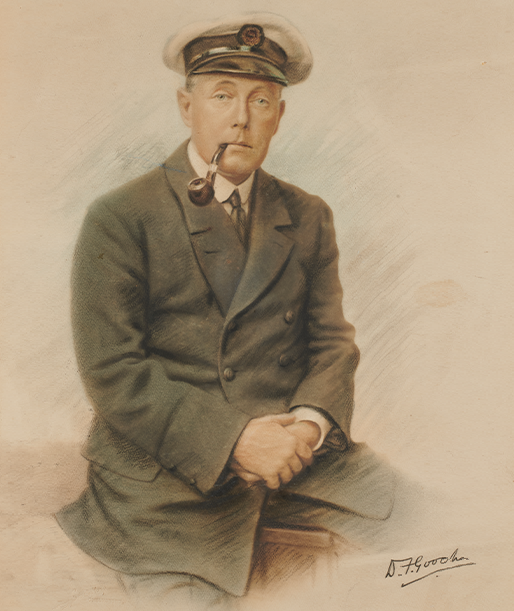
Sir Daniel Gooch becomes the Captain–elect at Chelmsford Golf Club. A renowned dog handler, he was drafted to assist Sir Ernest Shackleton’s South Polar Expedition. He returned to supervise the conversion of his home, Hylands Park as a temporary war hospital.
Course expansion and re-design by Harry Colt who designed or modified over 300 courses throughout his career including Royal Portrush, Gullane, Sunningdale New, Royal St. Georges, Royal Worlington and The Berkshire.
Chelmsford GC President Walter Hilliard successfully led in the purchase of the land freehold and formed Chelmsford Golf Club Ltd helping to stabilise the position of the club.

A highly influential individual, amongst the many modernisation benefits instigated by Barford was the introduction of electricity and mains drainage to the club. The humps on the 11th fairway are commonly referred to as the Barford Bumps. Barford had a significant role to play in the modernisation of the Club, as well as pursuing his ambition to see the course located entirely on the Chelmsford side of the railway. He was single-minded, enterprising, and in his professional capacity privy to information about changes in the borough well before many others. In fact, in many ways he shaped the modern Club that we know and play to this day.
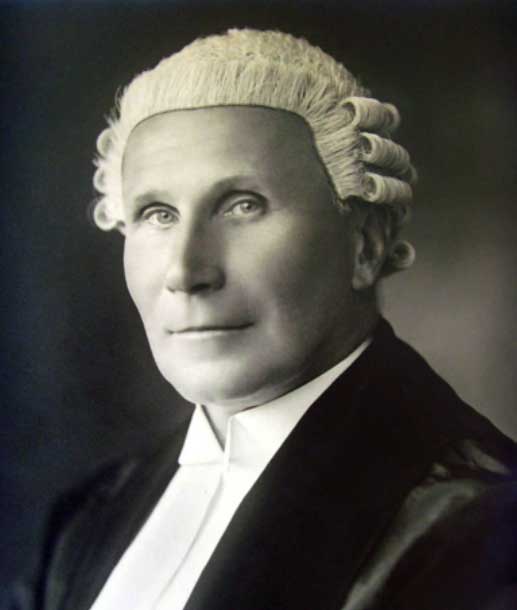
The new course opened for play on April 15th, 1938, which happened to be Good Friday of that year. It commenced at 9.30 a.m. with a special four-ball played between the President, Mr. J.T. Bellamy and the previous three Club Captains, Messrs J.E. Ellis Pilgrim, G.E. Barford and H. Coleman-Smith. The order in which the holes were played was altered several times in the early years. At first, the first 9 were played as we play the holes today, but the back 9 started at our 15th, and played to 18, then moved to our tenth and played round to 14. It may be that the Committee felt that the course should finish with a more substantial hole than a par three. The bogey score was set at 74.

Dennis Bailey was the Club’s Professional from 1959-1998. Since 1930, we have only had three full time professionals at the Club – Jesse Hemsley, Dennis Bailey who was our pro for 39 years, and now Mark Welch who recently celebrated 25 years at the club. In his first year, he hosted an exhibition match in which Dai Rees, Bernard Hunt, Ken Bousfield and Peter Alliss participated. This was played in May 1959 and the four played some sparkling golf, with Hunt going round in 66, Alliss 67, Rees 68 and Bousfield 71. Alliss played the back nine in 28 shots, and he and Hunt won by four and two.

The bar and changing rooms as they were in 1960 before the refurbishment of 1962.
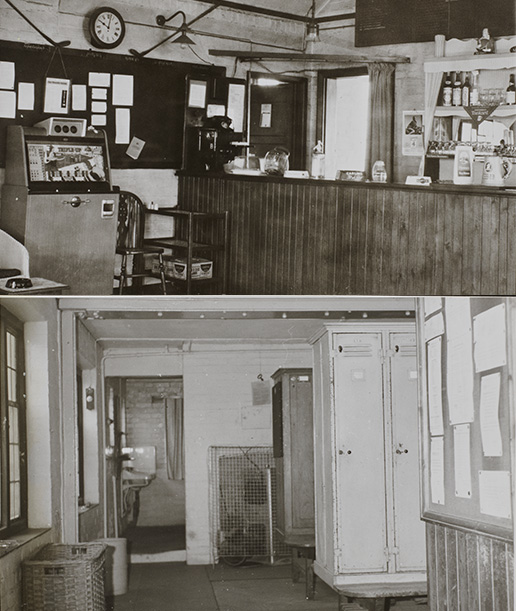
In 1962 substantial improvement work commenced on the clubhouse to modernise and enlarge the building, including more space in the downstairs changing rooms. Upstairs the veranda lounge was replaced with a mixed bar and lounge to give the ladies equal access to the bar with the men. The external twin flights of stairs at the front were to be eliminated but the two roof gables were retained. At the same time the professional’s corrugated iron hut beside the eighteenth green was to be scrapped. (This had started life as temporary accommodation for the ladies in 1925). A purpose-built professional’s shop was to be built beside the putting green.

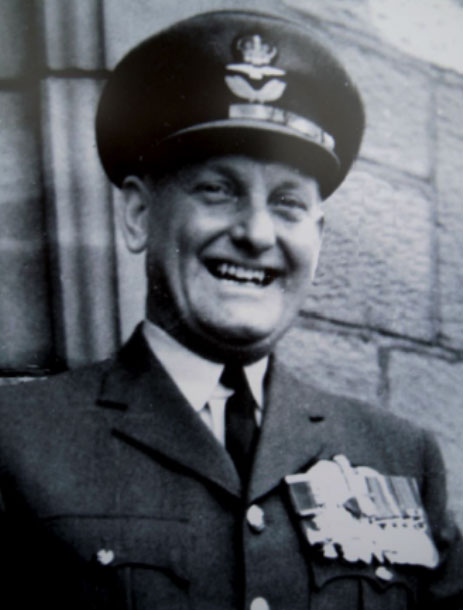
Wing Commander BR Templeman-Rooke joins the club as Secretary Manager in 1976, a post he held until 1994. “TR” as he was universally known flew over 60 missions with Bomber Command in 1943 in Lancaster bombers. On one mission he lost two of his four engines, the tops of the twin tails on his aircraft and his rear gunner. On landing his Lancaster was found to have 90 bullet holes in it.
In 1981, the Management Committee were advised that some structural work was needed on the Clubhouse, and they decided to combine this with a substantial extension and modernisation programme. This involved pushing out the front of the Clubhouse to give greater space in the mixed lounge, an extended dining room and the possibility of an open veranda area overlooking the 18th green. Internally, the bar area and kitchen would be modernised, and the men’s changing area extended towards the railway. The work was commenced at the beginning of 1982, and the completed Clubhouse was opened on 10th September 1982.

The Centenary Year began with a varied program of events put together by the Centenary Committee chaired by John Briggs. A Centenary Book was one of several tangible results of the Committee's work with our President, Ken Warden, and Michael Williams, our Centenary Captain who, between them researched, composed, and edited the Club's first One Hundred Years. Centenary mementoes included the Captain's Table and the Presentation Table in the Clubhouse which were made from oak from trees on the course felled in the great storm of October 1987. The cost was funded by a generous legacy to the Club from the estate of Bruce Pender. The most impressive acquisition to mark our Centenary is the Centenary Trophy, the only singles trophy for which both Lady and Gentleman members may compete.

In 1995, the Committee set about addressing the issue of equality for all members of the Club. By the AGM in February 1996, the rules had been rewritten to reflect the fact that all adult-playing members of the Club should enjoy equal access to its facilities and equal opportunities to serve as members of the management committee and as Directors of Chelmsford Golf Club Ltd. The following year, in 1997, Mrs Anne Robinson was elected to serve on the Management Committee and thus became the first lady to become a Director of the Company in its history. There have been ladies serving as Directors every year since then.

During 2003, the redevelopment plans for the Clubhouse hit significant problems. The firm, who had been chosen by the Committee to carry out the work based on the lowest tender, went into liquidation. Fortunately, no contracts had been placed with them. Estimates by other contractors were considerably higher, and the Committee revisited the plans to bring the costs back to an affordable level of £550,000. The revised scheme retained most of the visible elements that had been approved but eliminated the planned integration between the members’ area of the Clubhouse, and the Flat to provide upstairs toilet facilities for the members.

Having started three major projects (completion of drainage install to all greens, commencement of replacing 39 bunkers and a complete refurbishment of the Clubhouse) and the largest single investment program in the Club’s history in October 2019 - the world was hit by the arrival of the Covid 19 pandemic. Despite having completely closed the Clubhouse for almost 7 weeks during the first lockdown, we retained 7 greens staff undertaking maintenance on the course whilst MJ Abbotts returned to complete the bunker project and start to repair damage to certain areas of the course whilst living in the completed club house.